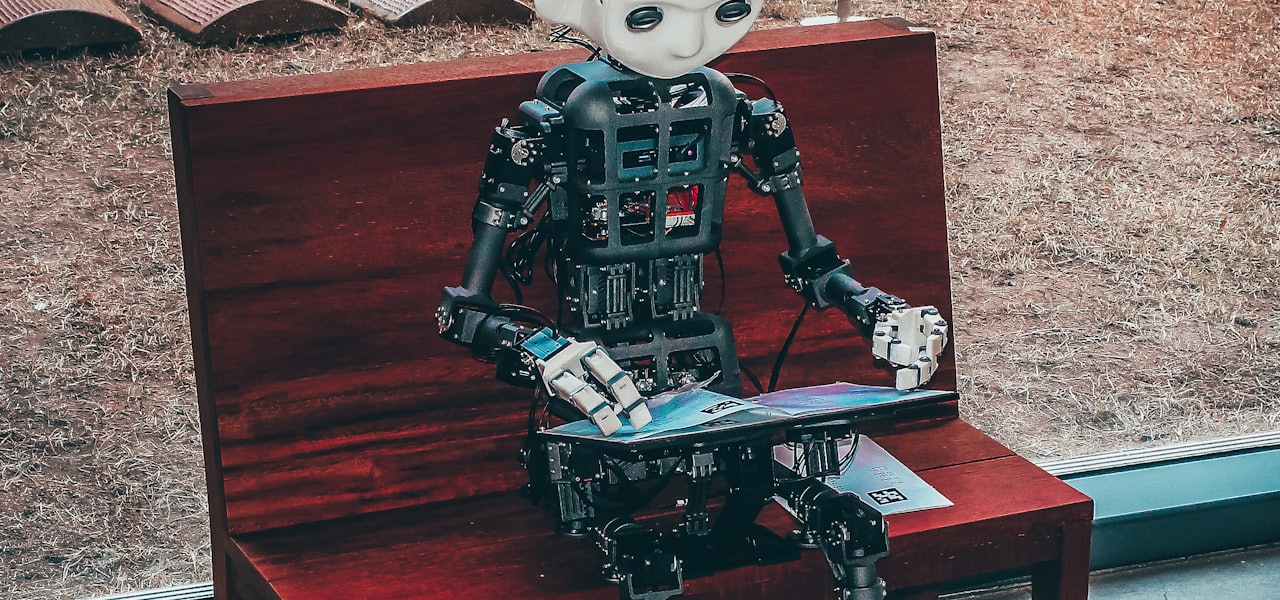
Biohybrid systems refer to the integration of biological materials, such as cells or tissues, with artificial components, including electronics or mechanical structure. This combination incorporates the capabilities of living organisms with the precision of man-made technology. As a result, these systems perform tasks that neither biology nor machines could achieve independently. Biohybrid systems might use lab-cultured muscle cells to power small robots or combine sensors with living tissue for better health sensing. The intent behind these systems is to combine the benefits of biological and technological components to introduce new solutions for complex medical challenges. Biohybrid systems may have transformative potential across sectors, such as robotics to create actuators and sensors that mimic natural muscle and nerve function, medicine in developing smart implants and drug delivery systems, in prosthetics for enhancing user control through neural or muscular interfaces and environmental sustainability for deploying biohybrid solutions for pollution sensing or remediation. == Origin == The term "biohybrid" is a compound of "bio" from biology (meaning life) and "hybrid" (referring to a combination of distinct elements), denoting a field of study. Its use helps distinguish such systems from purely biological constructs or entirely synthetic machines. Early academic mentions may include bio actuated robotics papers and foundational tissue-robot integration studies published in journals like Nature Biotechnology or Science Robotics. The emergence of the term reflects a growing recognition of the need to describe systems that do not fit cleanly into traditional categories. == Design principles == One of the most significant biohybrid challenges is to engineer interfaces between living tissue and artificial materials that are efficient. This means having precise control over adhesion at the surface, diffusion of nutrients, and signal conduction. Actuation mechanisms within the heart of these systems generate movement or mechanical response. These may be in the form of living muscle cells such as skeletal myocytes or cardiomyocytes, soft pneumatic actuators, or electrical stimulation-responsive tissues. Materials selection is equally critical. Hydrogels, elastomers like PDMS (polydimethylsiloxane), and biopolymers are commonly used due to their softness and biocompatibility. These materials must support cell viability, resist immune attack, and allow the integration of mechanical or electrical components. == Key components == At their core, biohybrid systems work by bridging living biological parts with technology. Through this integration, functionality that neither system could accomplish singularly is possible. Biological parts may be cells, tissues, or even organs—occasionally cultured in a laboratory setting. These biological parts carry out biologically inspired behaviors, such as muscle contraction or chemical sensing in the body. Technological components may constitute devices like sensors, electronic components, and mechanical structure. These manipulate the system, supply power, or transfer data. An example is a sensor that is implantable within a body and detects glucose levels as it sends information to a smart phone. By integrating these artificial and biological parts, biohybrid systems can perform advanced functions, such as tissue regeneration, real-time health monitoring, or the recovery of motor function in paralysis patients. Biohybrid systems generally consist of two major components: the biological and the mechanical. Biological components may include muscle cells for contraction, endothelial cells for vascularization, and stem cells for regenerative capabilities. Mechanical components comprise soft actuators that mimic organic motion, synthetic scaffolds that provide support and structure, and microfluidic systems that facilitate the delivery of nutrients and removal of waste. These components are combined in a manner that allows for dynamic, lifelike behavior—such as the contraction of tissue or the propagation of mechanical waves—while maintaining biocompatibility and durability. == Applications == The range of applications for biohybrid systems is broad and continuously expanding. In robotics, biohybrid structures have been used to engineer microscopic, muscle-driven machines, such as Harvard University's biohybrid stingray robot. In medical applications, they offer new alternatives for organ repair and augmentation, including biohybrid heart valves and esophageal scaffolds. Biohybrids are also promising in neural interfaces, where the goal is to create long-lasting, stable interaction between mechanical devices and brain tissue. Muscle-actuated drug response platforms are under exploration in pharmacology for modelling and real-time screening. == Examples == Several high-profile research projects have demonstrated the potential of biohybrid systems: Harvard researchers developed a biohybrid swimming ray powered by rat cardiac cells layered onto a gold skeleton, mimicking the motion of a real stingray. At the Massachusetts Institute of Technology, a cardiac pump actuated entirely by living heart muscle cells was engineered to simulate the behavior of a beating heart. Bio actuated soft robots have been built to simulate gut peristalsis, using muscle contractions to replicate natural wave-like movement in the digestive tract. == Challenges and limitations == As with many technologies that involve living systems, biohybrid systems raise important ethical and biomedical questions. Cell sourcing remains a key issue, particularly when embryonic or animal-derived cells are used. Long-term viability is another concern—living tissues must be kept alive with nutrients and oxygen, and they often degrade or elicit immune responses when implanted. Powering these biological parts presents logistical and ethical hurdles as well. Systems must either include internal mechanisms for nutrient delivery or be supported externally, which can limit portability and independence. == Future directions == Researchers are exploring self-directed, self-regulated organ substitutes and regenerative implants that can respond to their surroundings in real-time. These systems may be integrated with artificial intelligence to make them adjust to stimuli and coordinate complex behaviors. Future potential applications are wearable biohybrid systems for rehabilitation, space medicine devices for long-duration missions, and implantable devices that integrate into human physiology.
Random feature
Random features (RF) are a technique used in machine learning to approximate kernel methods, introduced by Ali Rahimi and Ben Recht in their 2007 paper "Random Features for Large-Scale Kernel Machines", and extended by. RF uses a Monte Carlo approximation to kernel functions by randomly sampled feature maps. It is used for datasets that are too large for traditional kernel methods like support vector machine, kernel ridge regression, and gaussian process. == Mathematics == === Kernel method === Given a feature map ϕ : R d → V {\textstyle \phi :\mathbb {R} ^{d}\to V} , where V {\textstyle V} is a Hilbert space (more specifically, a reproducing kernel Hilbert space), the kernel trick replaces inner products in feature space ⟨ ϕ ( x i ) , ϕ ( x j ) ⟩ V {\displaystyle \langle \phi (x_{i}),\phi (x_{j})\rangle _{V}} by a kernel function k ( x i , x j ) : R d × R d → R {\displaystyle k(x_{i},x_{j}):\mathbb {R} ^{d}\times \mathbb {R} ^{d}\to \mathbb {R} } Kernel methods replaces linear operations in high-dimensional space by operations on the kernel matrix: K X := [ k ( x i , x j ) ] i , j ∈ 1 : N {\displaystyle K_{X}:=[k(x_{i},x_{j})]_{i,j\in 1:N}} where N {\textstyle N} is the number of data points. === Random kernel method === The problem with kernel methods is that the kernel matrix K X {\textstyle K_{X}} has size N × N {\textstyle N\times N} . This becomes computationally infeasible when N {\textstyle N} reaches the order of a million. The random kernel method replaces the kernel function k {\textstyle k} by an inner product in low-dimensional feature space R D {\textstyle \mathbb {R} ^{D}} : k ( x , y ) ≈ ⟨ z ( x ) , z ( y ) ⟩ {\displaystyle k(x,y)\approx \langle z(x),z(y)\rangle } where z {\textstyle z} is a randomly sampled feature map z : R d → R D {\textstyle z:\mathbb {R} ^{d}\to \mathbb {R} ^{D}} . This converts kernel linear regression into linear regression in feature space, kernel SVM into SVM in feature space, etc. Since we have K X ≈ Z X T Z X {\displaystyle K_{X}\approx Z_{X}^{T}Z_{X}} where Z X = [ z ( x 1 ) , … , z ( x N ) ] {\displaystyle Z_{X}=[z(x_{1}),\dots ,z(x_{N})]} , these methods no longer involve matrices of size O ( N 2 ) {\textstyle O(N^{2})} , but only random feature matrices of size O ( D N ) {\textstyle O(DN)} . == Random Fourier feature == === Radial basis function kernel === The radial basis function (RBF) kernel on two samples x i , x j ∈ R d {\displaystyle x_{i},x_{j}\in \mathbb {R} ^{d}} is defined as k ( x i , x j ) = exp ( − ‖ x i − x j ‖ 2 2 σ 2 ) {\displaystyle k(x_{i},x_{j})=\exp \left(-{\frac {\|x_{i}-x_{j}\|^{2}}{2\sigma ^{2}}}\right)} where ‖ x i − x j ‖ 2 {\displaystyle \|x_{i}-x_{j}\|^{2}} is the squared Euclidean distance and σ {\displaystyle \sigma } is a free parameter defining the shape of the kernel. It can be approximated by a random Fourier feature map z : R d → R 2 D {\displaystyle z:\mathbb {R} ^{d}\to \mathbb {R} ^{2D}} : z ( x ) := 1 D [ cos ⟨ ω 1 , x ⟩ , sin ⟨ ω 1 , x ⟩ , … , cos ⟨ ω D , x ⟩ , sin ⟨ ω D , x ⟩ ] T {\displaystyle z(x):={\frac {1}{\sqrt {D}}}[\cos \langle \omega _{1},x\rangle ,\sin \langle \omega _{1},x\rangle ,\ldots ,\cos \langle \omega _{D},x\rangle ,\sin \langle \omega _{D},x\rangle ]^{T}} where ω 1 , . . . , ω D {\displaystyle \omega _{1},...,\omega _{D}} are IID samples from the multidimensional normal distribution N ( 0 , σ − 2 I ) {\displaystyle N(0,\sigma ^{-2}I)} . Since cos , sin {\displaystyle \cos ,\sin } are bounded, there is a stronger convergence guarantee by Hoeffding's inequality. === Random Fourier features === By Bochner's theorem, the above construction can be generalized to arbitrary positive definite shift-invariant kernel k ( x , y ) = k ( x − y ) {\displaystyle k(x,y)=k(x-y)} . Define its Fourier transform p ( ω ) = 1 2 π ∫ R d e − j ⟨ ω , Δ ⟩ k ( Δ ) d Δ {\displaystyle p(\omega )={\frac {1}{2\pi }}\int _{\mathbb {R} ^{d}}e^{-j\langle \omega ,\Delta \rangle }k(\Delta )d\Delta } then ω 1 , . . . , ω D {\displaystyle \omega _{1},...,\omega _{D}} are sampled IID from the probability distribution with probability density p {\displaystyle p} . This applies for other kernels like the Laplace kernel and the Cauchy kernel. === Neural network interpretation === Given a random Fourier feature map z {\displaystyle z} , training the feature on a dataset by featurized linear regression is equivalent to fitting complex parameters θ 1 , … , θ D ∈ C {\displaystyle \theta _{1},\dots ,\theta _{D}\in \mathbb {C} } such that f θ ( x ) = R e ( ∑ k θ k e i ⟨ ω k , x ⟩ ) {\displaystyle f_{\theta }(x)=\mathrm {Re} \left(\sum _{k}\theta _{k}e^{i\langle \omega _{k},x\rangle }\right)} which is a neural network with a single hidden layer, with activation function t ↦ e i t {\displaystyle t\mapsto e^{it}} , zero bias, and the parameters in the first layer frozen. In the overparameterized case, when 2 D ≥ N {\displaystyle 2D\geq N} , the network linearly interpolates the dataset { ( x i , y i ) } i ∈ 1 : N {\displaystyle \{(x_{i},y_{i})\}_{i\in 1:N}} , and the network parameters is the least-norm solution: θ ^ = arg min θ ∈ C D , f θ ( x k ) = y k ∀ k ∈ 1 : N ‖ θ ‖ {\displaystyle {\hat {\theta }}=\arg \min _{\theta \in \mathbb {C} ^{D},f_{\theta }(x_{k})=y_{k}\forall k\in 1:N}\|\theta \|} At the limit of D → ∞ {\displaystyle D\to \infty } , the L2 norm ‖ θ ^ ‖ → ‖ f K ‖ H {\displaystyle \|{\hat {\theta }}\|\to \|f_{K}\|_{H}} where f K {\displaystyle f_{K}} is the interpolating function obtained by the kernel regression with the original kernel, and ‖ ⋅ ‖ H {\displaystyle \|\cdot \|_{H}} is the norm in the reproducing kernel Hilbert space for the kernel. == Other examples == === Random binning features === A random binning features map partitions the input space using randomly shifted grids at randomly chosen resolutions and assigns to an input point a binary bit string that corresponds to the bins in which it falls. The grids are constructed so that the probability that two points x i , x j ∈ R d {\displaystyle x_{i},x_{j}\in \mathbb {R} ^{d}} are assigned to the same bin is proportional to K ( x i , x j ) {\displaystyle K(x_{i},x_{j})} . The inner product between a pair of transformed points is proportional to the number of times the two points are binned together, and is therefore an unbiased estimate of K ( x i , x j ) {\displaystyle K(x_{i},x_{j})} . Since this mapping is not smooth and uses the proximity between input points, Random Binning Features works well for approximating kernels that depend only on the L 1 {\displaystyle L_{1}} distance between datapoints. === Orthogonal random features === Orthogonal random features uses a random orthogonal matrix instead of a random Fourier matrix. == Historical context == In NIPS 2006, deep learning had just become competitive with linear models like PCA and linear SVMs for large datasets, and people speculated about whether it could compete with kernel SVMs. However, there was no way to train kernel SVM on large datasets. The two authors developed the random feature method to train those. It was then found that the O ( 1 / D ) {\displaystyle O(1/D)} variance bound did not match practice: the variance bound predicts that approximation to within 0.01 {\displaystyle 0.01} requires D ∼ 10 4 {\displaystyle D\sim 10^{4}} , but in practice required only ∼ 10 2 {\displaystyle \sim 10^{2}} . Attempting to discover what caused this led to the subsequent two papers.
Cryptographic Service Provider
A cryptographic service provider (CSP) is a package that "provides a concrete implementation of certain cryptographic services." A CSP offers operations and protocols to support a variety of use cases. The cryptographic application programming interface (API) provided by the CSP provides common solutions for different platforms, for example hardware and cloud services. == Microsoft Windows == In Microsoft Windows, a Cryptographic Service Provider is a software library that implements the Microsoft CryptoAPI (CAPI). CSPs implement encoding and decoding functions, which computer application programs may use, for example, to implement strong user authentication or for secure email. CSPs are independent modules that can be used by different applications. A user program calls CryptoAPI functions and these are redirected to CSPs functions. Since CSPs are responsible for implementing cryptographic algorithms and standards, applications do not need to be concerned about security details. Furthermore, each application can define which CSP it is going to use on its calls to CryptoAPI. In fact, all cryptographic activity is implemented in CSPs. CryptoAPI only works as a bridge between the application and the CSP. CSPs are implemented basically as a special type of DLL with special restrictions on loading and use. Every CSP must be digitally signed by Microsoft and the signature is verified when Windows loads the CSP. In addition, after being loaded, Windows periodically re-scans the CSP to detect tampering, either by malicious software such as computer viruses or by the user him/herself trying to circumvent restrictions (for example on cryptographic key length) that might be built into the CSP's code. To obtain a signature, non-Microsoft CSP developers must supply paperwork to Microsoft promising to obey various legal restrictions and giving valid contact information. As of circa 2000, Microsoft did not charge any fees to supply these signatures. For development and testing purposes, a CSP developer can configure Windows to recognize the developer's own signatures instead of Microsoft's, but this is a somewhat complex and obscure operation unsuitable for nontechnical end users. The CAPI/CSP architecture had its origins in the era of restrictive US government controls on the export of cryptography. Microsoft's default or "base" CSP then included with Windows was limited to 512-bit RSA public-key cryptography and 40-bit symmetric cryptography, the maximum key lengths permitted in exportable mass market software at the time. CSPs implementing stronger cryptography were available only to U.S. residents, unless the CSPs themselves had received U.S. government export approval. The system of requiring CSPs to be signed only on presentation of completed paperwork was intended to prevent the easy spread of unauthorized CSPs implemented by anonymous or foreign developers. As such, it was presented as a concession made by Microsoft to the government, in order to get export approval for the CAPI itself. After the Bernstein v. United States court decision establishing computer source code as protected free speech and the transfer of cryptographic regulatory authority from the U.S. State Department to the more pro-export Commerce Department, the restrictions on key lengths were dropped, and the CSPs shipped with Windows now include full-strength cryptography. The main use of third-party CSPs is to interface with external cryptography hardware such as hardware security modules (HSM) or smart cards. === Smart Card CSP === These cryptographic functions can be realized by a smart card, thus the Smart Card CSP is the Microsoft way of a PKCS#11. Microsoft Windows is identifying the correct Smart Card CSP, which have to be used, analyzing the answer to reset (ATR) of the smart card, which is registered in the Windows Registry. Installing a new CSP, all ATRs of the supported smart cards are enlisted in the registry. === Use of CSP in MS Office password protection === Cryptographic service providers can be used for encryption of Word, Excel, and PowerPoint documents starting from Microsoft Office XP. A standard encryption algorithm with a 40-bit key is used by default, but enabling a CSP enhances key length and thus makes decryption process more continuous. This only applies to passwords that are required to open document because this password type is the only one that encrypts a password-protected document.
Sex differences in social media use
Men and women use social media in different ways and with different frequencies. In general, several researchers have found that women tend to use social network services (SNSs) more than men and primiarly to socialize. == Differences == === Predilection for usage === Many studies have found that women are more likely to use either specific SNSs such as Facebook or MySpace or SNSs in general. In 2015, 73% of online men and 80% of online women used social networking sites. The gap in gender differences has become less apparent in LinkedIn. In 2015 about 26 percent of online men and 25% of online women used the business-and employee-oriented networking site. Researchers who have examined the gender of users of multiple SNSs have found contradictory results. Hargittai's groundbreaking 2007 study examining race, gender, and other differences between undergraduate college student users of SNSs found that women were not only more likely to have used SNSes than men but that they were also more likely to have used many different services, including Facebook, MySpace, and Friendster; these differences persisted in several models and analyses. Although she only surveyed students at one institution – the University of Illinois at Chicago – Hargittai selected that institution intentionally as "an ideal location for studies of how different kinds of people use online sites and services." In contrast, data collected by the Pew Internet & American Life Project found that men were more likely to have multiple SNS profiles. Although the sample sizes of the two surveys are comparable – 1,650 Internet users in the Pew survey compared with 1,060 in Hargittai's survey – the data from the Pew survey are newer and arguably more representative of the entire adult United States population. Pinterest, Facebook, and Instagram attract more females. Picture sharing sites overall are very popular among women. Pinterest alone attracts three times as many female users than male. However, use of Pinterest by men has increased from 5% in 2012. Facebook attracts about 77% of women online. Instagram is also more likely to attract women. Men are more likely to participate in online forums like Reddit, Digg or Slashdot. One in five men claim to be a part of an online forum. === Uses === In general, women seem to use SNSs more to explicitly foster social connections. A study conducted by Pew research centers found that women were more avid users of social media. In November 2010, the gap between men and women was as high as 15%. Female participants in a multi-stage study conducted in 2007 to discover the motivations of Facebook users scored higher on scales for social connection and posting of photographs. Studies have also been conducted on the differences between females and males with regards to blogging. The Pew Research Center found that younger females are more likely to blog than males their own age, even males that are older than them. Similarly, in a study of blogs maintained in MySpace, women were found to be more likely to not only write blogs but also write about family, romantic relationships, friendships, and health in those blogs. A study of Swedish SNS users found that women were more likely to have expressions of friendship, specifically in the areas of (a) publishing photos of their friends, (b) specifically naming their best friends, and (c) writing poems to and about their friends. Women were also more likely to have expressions related to family relationships and romantic relationships. One of the key findings of this research is that those men who do have expressions of romantic relationships in their profile had expressions just as strong as the women. However, the researcher speculated that this may be in part due to a desire to publicly express heterosexual behaviors and mannerisms instead of merely expressing romantic feelings. A large-scale study of gender differences in MySpace found that both men and women tended to have a majority of female Friends, and both men and women tended to have a majority of female "Top" Friends in the site. A later study found women to author disproportionately many (public) comments in MySpace, but an investigation into the role of emotion in public MySpace comments found that women both give and receive stronger positive emotion. It was hypothesised that women are simply more effective at using social networking sites because they are better able to harness positive emotion. A study focused on the influence of gender and personality on individuals' use of online social networking websites such as Facebook, reported that men use social networking sites with the intention of forming new relationships, whereas, women use them more for relationship maintenance. In addition to this, women are more likely to use Facebook or MySpace to compare themselves to others and also to search for information. Men, however, are more likely to look at other people's profiles with in the intention to find friends. Women were less successful at actually finding new friends, but more successful at "maintaining existing relationships, making new relationships, using for academic purposes and following specific agenda". Similarly, men also self-reported this motivation "while women reported using them more for relationship maintenance". === Personality === OCEAN personality traits are known to systematically vary between human males and females. In one study, the same women were more extraverted and agreeable, such as less neurotic while on social media than offline. Other studies associated neuroticism with female use of social media. === Privacy === Privacy has been the primary topic of many studies of SNS users, and many of these studies have found differences between male and female SNS users, although some studies have found results contradictory to those found in other studies. Some researchers have found that women are more protective of their personal information and more likely to have private profiles. Other researchers have found that women are less likely to post some types of information. Acquisti and Gross found that women in their sample were less likely to reveal their sexual orientation, personal address, or cell phone number. This is similar to Pew Internet & American Life research of children users of SNSs that found that boys and girls presented different views of privacy and behaviors, with girls being more concerned about and restrictive of information such as city, town, last name, and cell phone number that could be used to locate them. At least one group of researchers has found that women are less likely to share information that "identifies them directly – last name, cell phone number, and address or home phone number," linking that resistance to women's greater concerns about "cyberstalking", "cyberbullying", and security problems. Despite these concerns about privacy, researchers have found that women are more likely to maintain up-to-date photos of themselves. Further, Kolek and Saunders found in their sample of college student Facebook users that women were more likely to not only post a photograph of themselves in their profile but that they were more likely to have a publicly viewable Facebook account (a contradictory finding compared to many other studies), post photos, and post photo albums. Women were more likely to have: (a) a publicly viewable Facebook account, (b) more photo albums, (c) more photos, (d) a photo of themselves as their profile picture, (e) positive references to alcohol, partying, or drugs, and (f) more positive references to or about the institution or institution-related activities. In general, women were more likely to disclose information about themselves in their Facebook profile, with the primary exception of sharing their telephone number. Similarly, female respondents to Strano's study were more likely to keep their profile photo recent and choose a photo that made them appear attractive, happy, and fun-loving. Citing several examples, Strano opined that there may also be a difference in how men and women Facebook users display and interpret profile photos depicting relationships. Privacy has also been a concern for the SnapChat app, which allows you to send messages either text or photo or video which then disappear. One study has shown that security is not a major concern for the majority of users and that most do not use Snapchat to send sensitive content (although up to 25% may do so experimentally). As part of their research almost no statistically significant gender differences were found. === Cyberbullying === Past research carried out to investigate if there are any gender differences in cyber-bullying has found that boys commit more cyber verbal bullying, cyber forgery and more violence based on hidden identity or presenting themselves as other person. === Mansplaining === A 2021 article found that mansplaining could be seen more prominent online rather than offl
Correlation immunity
In mathematics, the correlation immunity of a Boolean function is a measure of the degree to which its outputs are uncorrelated with some subset of its inputs. Specifically, a Boolean function is said to be correlation-immune of order m if every subset of m or fewer variables in x 1 , x 2 , … , x n {\displaystyle x_{1},x_{2},\ldots ,x_{n}} is statistically independent of the value of f ( x 1 , x 2 , … , x n ) {\displaystyle f(x_{1},x_{2},\ldots ,x_{n})} . == Definition == A function f : F 2 n → F 2 {\displaystyle f:\mathbb {F} _{2}^{n}\rightarrow \mathbb {F} _{2}} is k {\displaystyle k} -th order correlation immune if for any independent n {\displaystyle n} binary random variables X 0 … X n − 1 {\displaystyle X_{0}\ldots X_{n-1}} , the random variable Z = f ( X 0 , … , X n − 1 ) {\displaystyle Z=f(X_{0},\ldots ,X_{n-1})} is independent from any random vector ( X i 1 … X i k ) {\displaystyle (X_{i_{1}}\ldots X_{i_{k}})} with 0 ≤ i 1 < … < i k < n {\displaystyle 0\leq i_{1}<\ldots U-Net is a convolutional neural network that was developed for image segmentation. The network is based on a fully convolutional neural network whose architecture was modified and extended to work with fewer training images and to yield more precise segmentation. Segmentation of a 512 × 512 image takes less than a second on a modern (2015) GPU using the U-Net architecture. The U-Net architecture has also been employed in diffusion models for iterative image denoising. This technology underlies many modern image generation models, such as DALL-E, Midjourney, and Stable Diffusion. U-Net is also being explored for language models. Tokenization is not a separate step, allowing the model to more easily understand spelling and concurrently vectorizing / tokenizing higher level concepts. == Description == The U-Net architecture stems from the so-called "fully convolutional network". The main idea is to supplement a usual contracting network by successive layers, where pooling operations are replaced by upsampling operators. Hence these layers increase the resolution of the output. A successive convolutional layer can then learn to assemble a precise output based on this information. One important modification in U-Net is that there are a large number of feature channels in the upsampling part, which allow the network to propagate context information to higher resolution layers. As a consequence, the expansive path is more or less symmetric to the contracting part, and yields a u-shaped architecture. The network only uses the valid part of each convolution without any fully connected layers. To predict the pixels in the border region of the image, the missing context is extrapolated by mirroring the input image. This tiling strategy is important to apply the network to large images, since otherwise the resolution would be limited by the GPU memory. Recently, there had also been an interest in receptive field based U-Net models for medical image segmentation. == Network architecture == The network consists of a contracting path and an expansive path, which gives it the u-shaped architecture. The contracting path is a typical convolutional network that consists of repeated application of convolutions, each followed by a rectified linear unit (ReLU) and a max pooling operation. During the contraction, the spatial information is reduced while feature information is increased. The expansive pathway combines the feature and spatial information through a sequence of up-convolutions and concatenations with high-resolution features from the contracting path. == Applications == There are many applications of U-Net in biomedical image segmentation, such as brain image segmentation (''BRATS'') and liver image segmentation ("siliver07") as well as protein binding site prediction. U-Net implementations have also found use in the physical sciences, for example in the analysis of micrographs of materials. Variations of the U-Net have also been applied for medical image reconstruction. Here are some variants and applications of U-Net as follows: Pixel-wise regression using U-Net and its application on pansharpening; 3D U-Net: Learning Dense Volumetric Segmentation from Sparse Annotation; TernausNet: U-Net with VGG11 Encoder Pre-Trained on ImageNet for Image Segmentation. Image-to-image translation to estimate fluorescent stains In binding site prediction of protein structure. == History == U-Net was created by Olaf Ronneberger, Philipp Fischer, Thomas Brox in 2015 and reported in the paper "U-Net: Convolutional Networks for Biomedical Image Segmentation". It is an improvement and development of FCN: Evan Shelhamer, Jonathan Long, Trevor Darrell (2014). "Fully convolutional networks for semantic segmentation". Bitcoin Satoshi Vision (BSV) is a cryptocurrency that is a hard fork of Bitcoin Cash. Bitcoin Satoshi Vision was created in November 2018 by a group of individuals led by Craig Steven Wright, who has claimed since 2015 to be Satoshi Nakamoto, the creator of the original bitcoin. == History == === 2018 split from Bitcoin Cash === On 15 November 2018, a hard fork chain split of Bitcoin Cash occurred between two rival factions called Bitcoin Cash and Bitcoin SV. On 15 November 2018 Bitcoin Cash traded at about $289, and Bitcoin SV traded at about $96.50, down from $425.01 on 14 November for the un-split Bitcoin Cash. The split originated from what was described as a "civil war" in two competing Bitcoin Cash camps. The first camp, supported by entrepreneur Roger Ver and Jihan Wu of Bitmain, promoted the software entitled Bitcoin ABC (short for Adjustable Blocksize Cap), which would maintain the block size at 32 MB. The second camp led by Craig Steven Wright and billionaire Calvin Ayre put forth a competing software version Bitcoin SV, short for "Bitcoin Satoshi Vision", which would increase the block size limit to 128 MB. === 2019 de-listing from Binance === In April 2019, an online feud broke out between those who supported the claims of Bitcoin SV supporter Craig Wright that he was Satoshi Nakamoto, and those who did not. The feud resulted in cryptocurrency exchange Binance de-listing Bitcoin SV from their platform, stating that: At Binance, we periodically review each digital asset we list to ensure that it continues to meet the high level of standard we expect. When a coin or token no longer meets this standard, or the industry changes, we conduct a more in-depth review and potentially delist it. We believe this best protects all of our users. When we conduct these reviews, we consider a variety of factors. Here are some that drive whether we decide to delist a digital asset: Commitment of team to project Level and quality of development activity Network / smart contract stability Level of public communication Responsiveness to our periodic due diligence requests Evidence of unethical / fraudulent conduct Contribution to a healthy and sustainable crypto ecosystem === 2021 network attack === In August 2021, Bitcoin SV suffered a 51% attack, after previously suffering attacks in June and July of the same year. Such an attack involves cryptocurrency miners gaining control of more than half of a network's computing power; these kinds of network attacks have the goal of preventing new transactions from gaining confirmations, allowing the attackers to double-spend coins. Adam James, senior editor at OKEx Insights claimed that "In the intermediate term, the attack has seemingly somewhat-negligible impact on its current price action," however "Faith in [Bitcoin SV] will likely be reduced following the incident." === 2024 high court ruling === In March 2024, Mr Justice James Mellor in the British High Court ruled that Wright is not Satoshi Nakamoto.U-Net
Bitcoin Satoshi Vision